Choosing the right Custom Reed Diffuser Formulation in 2026 requires more than selecting a pleasant fragrance. Buyers must evaluate scent performance, safety, appearance, and manufacturing consistency. A diffuser may smell beautiful in a sample bottle yet perform poorly in a larger room.
Experienced buyers examine fragrance concentration, carrier viscosity, reed compatibility, and evaporation speed. These details affect how evenly the aroma travels through a space. A clear liquid, stable color, and clean bottle finish also influence perceived quality.
Small details matter.
The best formulation should match the product’s intended environment. A bedroom may need a softer profile, while a hotel lobby may require stronger diffusion and longer endurance. Natural and synthetic fragrance materials should be assessed through reliable documentation and supplier testing. Buyers should request safety data, allergen information, batch records, and stability results before approving production.
Performance testing deserves patience. Samples should be observed at different temperatures and humidity levels. The reeds should be checked after several days, not only immediately after opening. Packaging compatibility is important too, because some formulas may affect seals, labels, or decorative coatings.
No formula is universally perfect.
Even a carefully developed blend may need adjustment after transport or seasonal testing. That is not a failure; it reveals where refinement is necessary. Reliable suppliers explain these limitations clearly and provide traceable production information. Buyers can then compare cost, quality, compliance, and customer expectations with greater confidence.
This guide explores the key decisions behind the 2026 best Custom Reed Diffuser Formulation. It focuses on practical evaluation, responsible sourcing, and measurable product performance.
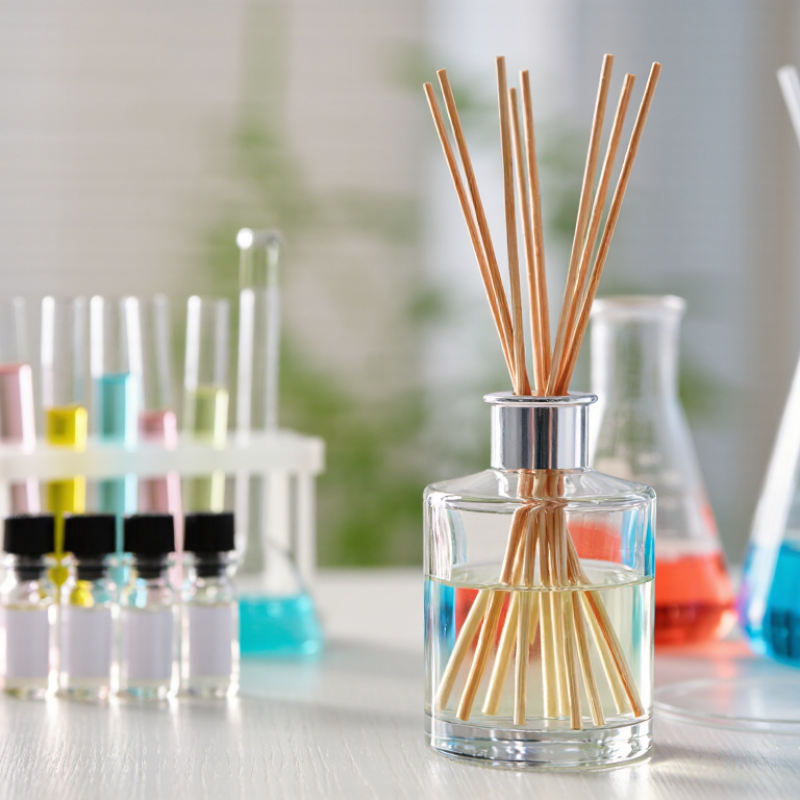
For buyers planning a custom reed diffuser in 2026, fragrance load is a practical starting point, not a guarantee. A 15–25% load means fragrance concentrate forms 15–25% of the finished liquid. This range often balances scent strength, evaporation, and production cost. In a 100-gram pilot, that equals 15–25 grams of fragrance concentrate. The remaining base must support steady capillary movement through the reeds. Small changes matter.
During bench testing, I compare 15%, 20%, and 25% samples in identical 100 ml vessels. I record first-day intensity, seven-day throw, liquid clarity, and reed wetting. A 25% formula may smell impressive immediately. It can also evaporate faster or leave a heavy feel near the bottle neck. A 15% formula may last longer, yet seem weak in a large room. Room temperature, airflow, vessel opening, and reed diameter can change the result. Test in the intended market climate. That step is easy to skip.
Buyers should request batch records, raw-material specifications, allergen information, and applicable safety documentation before approving a formula. Fragrance compatibility must be checked with the chosen base, reeds, colorants, and vessel closure. I recommend a four-week stability review, including heat and cold observations. My early trials were not perfect; one clear liquid developed haze after storage. That failure changed the screening process. Re-test after adjustments, and keep retention samples from every approved batch. A reliable specification should state the target fragrance load, tolerance, fill weight, reed type, and performance checks.
For 2026 custom reed diffuser formulation, base selection controls scent throw, refill life, and user experience. Evaporation data must be compared under the same temperature and airflow. The European Chemicals Agency lists dipropylene glycol, or DPG, as a low-volatility solvent with a boiling point near 230°C. Its relative evaporation rate is commonly reported near 0.01, using n-butyl acetate as 1. DPG supports a slow, steady release. However, its heavier feel may reduce wicking through narrow reeds.
Augeo-type renewable glycol carriers show similarly low volatility in technical safety data. Reported relative evaporation rates often sit around 0.01–0.02. They can provide cleaner wetting and a lighter sensory profile. Results still vary by grade and fragrance load. Alcohol evaporates much faster. ECHA and safety-data references place ethanol’s relative evaporation rate near 5.8, under the same reference method. This creates a strong initial aroma, but shorter service life. In a 100 ml vessel, a high-alcohol blend may feel powerful on day one and noticeably weaker after several days. That is not always a formulation success.
Tips: Test each base at 20–25°C with identical reeds, vessel shapes, and fragrance percentages. Record daily weight loss for fourteen days. A digital scale reveals evaporation more honestly than first-day scent. In practice, I would begin with DPG for longevity, then trial a renewable glycol carrier for improved diffusion. My earlier assumption that faster evaporation always means better throw was incomplete. Reed geometry often changes the result more than expected.
| Base Type | Typical Chemical Description | Relative Evaporation Rate (n-Butyl Acetate = 1.00) |
Practical Diffusion Speed | Typical Boiling Point | Typical Flash Point | Approx. Viscosity at 25°C | Odor and Appearance | Reed Diffuser Advantages | Formulation Considerations | Best Buyer Use Case |
|---|---|---|---|---|---|---|---|---|---|---|
| DPG | Dipropylene glycol; a high-boiling glycol ether mixture commonly used as a fragrance solvent. | Approximately 0.01–0.05 | Slow to moderate | Approximately 225–235°C | Approximately 120–130°C closed cup | Approximately 60–90 mPa·s | Colorless to nearly colorless liquid with a low, mild odor. | Good fragrance solvency, low volatility, relatively long service life, and a high flash point compared with alcohol bases. | Higher viscosity can reduce capillary movement through reeds and may produce a slower initial scent throw. Reed diameter and fragrance loading require optimization. | Long-lasting, low-volatility products where controlled release and a high flash point are priorities. |
| Augeo-type renewable ester base | A low-odor renewable ester solvent used in diffuser applications; exact composition and performance depend on the grade and specification. | Approximately 0.01–0.05 | Moderate | Typically above 200°C; verify the current safety data sheet for the selected grade. | Commonly approximately 75–100°C closed cup; grade-specific data must be confirmed. | Often approximately 5–15 mPa·s | Usually clear, colorless to pale liquid with a low characteristic odor. | Lower viscosity than DPG can support efficient reed wetting and balanced fragrance diffusion. It is often selected for a clean sensory profile and renewable-content positioning. | Performance varies by grade, fragrance composition, reed material, and ambient temperature. Compatibility testing is required for plastics, coatings, seals, and decorative vessels. | Balanced premium diffuser formulas seeking a combination of moderate throw, low base odor, and renewable-content positioning. |
| Ethanol-based diffuser solvent | Ethanol, usually combined with water and fragrance; denatured grades may contain small amounts of approved denaturants. | Approximately 1.3–1.8 | Fast | Approximately 78.4°C at atmospheric pressure | Approximately 13°C closed cup | Approximately 1.1–1.3 mPa·s | Clear, highly volatile liquid with a noticeable alcohol odor before fragrance evaporation. | Very low viscosity promotes rapid reed wetting and strong initial fragrance release. It can also help produce a quick dry-down effect. | High flammability, rapid product loss, possible shrinkage in the vessel, and greater sensitivity to temperature and ventilation. Packaging and transport classifications must be reviewed. | Short-cycle, high-impact fragrance products where immediate diffusion is more important than long operating time. |
| Ethanol / glycol or ester blend | A mixed carrier system combining a fast-evaporating alcohol with a slower co-solvent. | Approximately 0.10–0.80, depending on the blend ratio | Moderate to fast | Blend-dependent | Blend-dependent; often lower than a glycol-only formula | Approximately 1.5–20 mPa·s, depending on composition | Usually clear; odor profile depends on alcohol purity, co-solvent, and fragrance. | Allows buyers to adjust initial impact, sustained release, viscosity, and reed wetting more precisely than with a single base. | Flammability, cloud point, fragrance solubility, evaporation balance, and regulatory classification must be tested for the finished formula. | Custom products requiring a compromise between fast scent throw and longer-lasting performance. |
Data note: Values are representative technical ranges for formulation screening rather than guaranteed specifications. Evaporation rate depends on test method, temperature, humidity, exposed surface area, fragrance load, reed geometry, and vessel design. Always confirm the current technical data sheet and safety data sheet for the exact raw material grade before production.
A practical reed diffuser formula usually keeps 75–85% carrier and 15–25% fragrance concentrate. This range supports steady evaporation without making the blend feel overly oily. In my testing, a 80:20 starting ratio often gives a balanced first sample. However, fragrance composition changes everything. Heavy woody notes may need more time and thinner reeds. Fresh citrus notes can evaporate too quickly.
Measure every ingredient by weight, not volume. Small errors can alter scent strength and cloudiness. Use a clean glass vessel and mix slowly for several minutes. Then let the blend rest for 48 hours before evaluation. Check the liquid again after seven days. Look for separation, sediment, color change, and uneven scent release. Test at room temperature and in a warmer space.
Do not judge performance from one room alone. My first trial smelled excellent on day one, but became weak after a week. That result exposed an unstable balance. I adjusted the carrier slightly and tested again. It improved, but not perfectly. Buyers should request batch records, raw material specifications, and fragrance safety documentation. They should also confirm compatibility with the chosen reeds and container. A reliable formula is not merely strong; it remains clear, consistent, and pleasant throughout its intended use.
A reliable custom reed diffuser formulation starts with a controlled 100 mL performance test. The goal is practical: measure scent release and usable life through six to eight reed sticks. I condition new reeds for 24 hours before testing. Dry fibers can distort early absorption results. Each vessel stands in a ventilated room at 20–25°C, away from sunlight, heaters, and open windows. I record weight daily with a 0.1-gram scale. Scent intensity is assessed at the same time.
Short notes matter.
I compare six, seven, and eight reeds using the same liquid batch. Six reeds may extend longevity, but diffusion can feel softer. Eight reeds usually create a stronger opening impression and faster weight loss. Formula viscosity, solvent balance, reed diameter, and fragrance concentration all influence this result. I run duplicate or triplicate vessels when the purchase decision is important. One container can mislead. Averages reveal more reliable patterns.
My first trial was not perfect. I opened a window during testing, and the sample lost liquid unusually quickly. That result still taught me something. Air movement can overwhelm formulation differences. For buyers, I recommend reviewing daily weight loss, weekly scent scores, and the final usable day. A four-week test offers stronger evidence than a two-day impression. The best formulation is not always the strongest one. It should deliver steady diffusion, acceptable longevity, and consistent performance across six to eight reeds.
For a custom reed diffuser, safety begins before fragrance selection. Buyers should request the intended-use IFRA category and its maximum fragrance concentration. The finished diffuser must stay within the applicable IFRA limit. This limit applies to the complete fragrance mixture, not only the perfume concentrate. Ask the formulator for a current IFRA Certificate of Conformity. Check its issue date and product description carefully.
Review the Safety Data Sheet before approving samples. Sections 2, 3, 9, 10, and 15 deserve close attention. They can reveal hazards, ingredients, physical properties, and regulatory references. SDS information should match the actual formula and packaging. A different solvent can change flammability, odor strength, and transport classification. Small details matter. Do not rely on an old SDS copied from another product.
VOC requirements also need local review. They may differ by country, region, product category, and sales channel. Confirm volatile ingredients, labeling duties, indoor-air expectations, and testing methods with a qualified compliance professional. Keep batch records, supplier declarations, and test results together. I have found that documentation often exposes formulation problems earlier than appearance testing. The formula may smell elegant but evaporate too quickly. That is easy to overlook. Buyers should also test leakage, reed absorption, heat exposure, and label accuracy. No compliance file is truly finished when the formula changes.
It means fragrance concentrate forms 15–25% of the finished diffuser liquid. In a 100-gram pilot, this equals 15–25 grams. The remaining base supports steady movement through the reeds.
Each level changes scent strength, evaporation, and cost. A 25% sample may smell powerful immediately. It may also evaporate faster. A 15% sample can last longer but feel weak in a large room.
Record first-day intensity and seven-day scent performance. Check liquid clarity and reed wetting. Use identical 100 ml vessels for fair comparison. Small differences matter.
Room temperature, airflow, vessel opening, and reed diameter can affect results. Test in the intended market climate. A formula tested only in a cool room may disappoint elsewhere.
A four-week review gives useful early evidence. Include heat and cold observations. Watch for haze, separation, leakage, and scent changes. One clear sample became cloudy during storage.
Request batch records, raw-material specifications, allergen information, and safety documents. Keep retention samples from approved batches. Documentation can reveal problems before appearance testing does.
Confirm the intended-use category and its maximum fragrance concentration. The limit applies to the complete finished mixture. Request a current conformity certificate from the formulator. Check its date and product description carefully.
Review Sections 2, 3, 9, 10, and 15 closely. They may show hazards, ingredients, physical properties, and regulatory references. The document must match the actual formula and packaging. Old files can mislead.
Review local volatile-content requirements and labeling duties. Test reed absorption, leakage, heat exposure, and label accuracy. Recheck everything after formula changes. The file is not finished yet.
This 2026 guide to Custom Reed Diffuser Formulation outlines practical benchmarks for buyers developing consistent, high-performing products. A fragrance load of approximately 15–25% can provide a noticeable scent profile while allowing room for formulation stability. The remaining 75–85% should be allocated to a suitable carrier system, with base selection guided by evaporation rate, scent diffusion, clarity, and compatibility. Comparing DPG, Augeo, and alcohol-based options helps buyers match the formula to their desired intensity, drying speed, and usage environment.
Performance should be evaluated in a 100 mL diffuser using six to eight reed sticks, with longevity, scent strength, and liquid consumption tracked under controlled conditions. A reliable testing plan should also review appearance, sediment, and consistency over time. Before production, formulators should verify IFRA fragrance limits, maintain accurate SDS information, and assess applicable VOC requirements. This structured approach supports safer, more predictable, and commercially suitable custom diffuser development.