0%

Choosing the China Best Home Fragrance Packaging Design Supplier requires more than comparing catalogs and quoted prices. A reliable partner must understand fragrance protection, visual branding, production accuracy, and international packaging expectations. Home Fragrance Packaging Design should balance beauty with performance, especially for candles, reed diffusers, room sprays, and essential oil products.

Experienced buyers examine glass thickness, cap fit, coating durability, printing precision, and carton strength. Small details matter. A loose lid can weaken customer trust. Uneven colors can damage a carefully built brand identity. Suppliers should provide material samples, structural prototypes, and clear quality-control records before mass production begins. Testing may include leakage checks, drop tests, odor compatibility reviews, and transportation simulations.

Practical sourcing also requires transparent communication. Ask about minimum order quantities, tooling fees, lead times, inspection procedures, and replacement policies. Responsible suppliers should explain material choices, recycled content, and applicable safety requirements without making vague environmental claims. Certifications can support trust, but they should be verified independently. No package is perfect. That assumption needs testing.

The strongest supplier is not always the cheapest option. A lower initial price may hide fragile glass, inconsistent decoration, or costly delays. A thoughtful evaluation compares total value, production experience, design support, and long-term reliability. This guide explores the capabilities that separate dependable Chinese packaging manufacturers from attractive but risky alternatives. It also considers where buyers should challenge supplier promises, improve specifications, and protect the final customer experience.
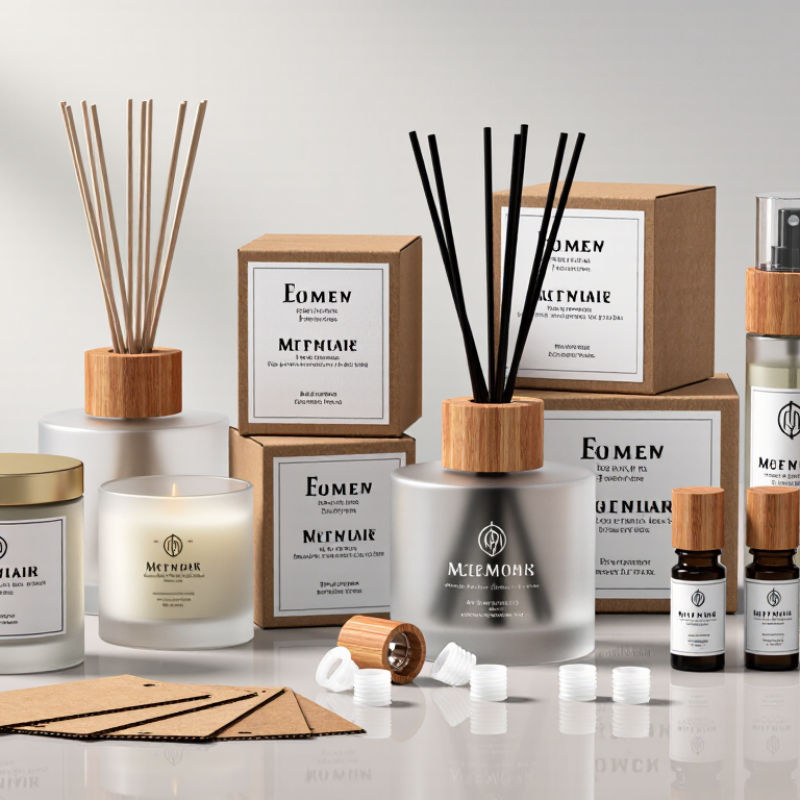
China Best Home Fragrance Packaging Design Supplier?

Global Home Fragrance Packaging Demand: 4.8% CAGR Forecast to 2030

China Best Home Fragrance Packaging Design Supplier?

Global demand for home fragrance packaging is forecast to grow at a 4.8% CAGR through 2030. This growth reflects rising interest in candles, diffusers, room sprays, and refill formats. Packaging now needs to protect scent quality while creating a strong shelf impression. Glass thickness, closure fit, and inner coating can affect leakage, breakage, and fragrance stability.

In real packaging projects, suppliers in China often support custom molds, color matching, surface finishing, and coordinated shipping. A reliable partner should provide material samples, production drawings, and pre-shipment inspection records. Test a jar with its actual wax or fragrance formula. Small differences in heat resistance can create major problems later. It is an important detail.

Sustainable design is also reshaping purchasing decisions. Recyclable glass, reduced plastic components, paper inserts, and compact cartons can lower material use. However, “eco-friendly” claims need evidence. Ask for material data, test results, and clear recycling guidance. A low unit price may look attractive, but it can hide weak quality control or high replacement costs. That is easy to overlook.

The best supplier is not simply the cheapest factory. It should understand protection, presentation, compliance, and repeat production. Request a pilot order before committing to large volumes. Review color consistency, printing accuracy, assembly speed, and carton strength. Forecasts suggest strong opportunity, but packaging decisions still require careful testing and honest reflection.

China Best Home Fragrance Packaging Design Supplier? - Global Home Fragrance Packaging Demand: 4.8% CAGR Forecast to 2030

Global Home Fragrance Packaging Demand Outlook, 2025–2030
Year Demand Index
(2025 = 100)
Annual Growth Cumulative Growth
vs. 2025
Packaging Design Implication
2025 100.00 — 0.0% Establish a baseline for material, format, and capacity planning.
2026 104.80 4.8% 4.8% Prioritize scalable packaging components and consistent quality control.
2027 109.83 4.8% 9.8% Use modular bottles, closures, and labels to support product-line expansion.
2028 115.10 4.8% 15.1% Increase the use of lightweight structures and recyclable mono-material solutions.
2029 120.63 4.8% 20.6% Design for transport durability, refill compatibility, and efficient secondary packaging.
2030 126.42 4.8% 26.4% Prepare production capacity for approximately 26.4% higher demand than the 2025 baseline.

Calculation basis: Demand Index = 100 × (1.048)n, where n is the number of years after 2025. The 4.8% annual growth rate is compounded through 2030.

China Supplier Capabilities: Glass, Metal, Paper, Wood, and Custom Molds

China’s strongest home fragrance packaging suppliers are not defined by one material. They are judged by how well glass, metal, paper, wood, and custom molds work together. During factory evaluations, I look beyond polished samples. I check neck dimensions, wall thickness, surface defects, closure fit, and batch consistency. Small errors become expensive during filling and assembly.

Glass suits candles and diffuser bottles because it offers weight, clarity, and chemical stability. Suppliers can develop clear, frosted, colored, or textured finishes. Metal adds structure through lids, collars, tins, and decorative sleeves. I request corrosion checks and repeated opening tests. Paper supports cartons, inserts, and labels. Recycled content may improve material transparency. Wood brings warmth to caps and trays, but moisture control matters. It can warp. That detail is often missed.

Custom molds allow distinctive silhouettes, embossed details, and controlled dimensions. A capable supplier should provide drawings, prototypes, mold-flow feedback, and approval records. Discuss tolerances before tooling begins. Otherwise, a beautiful prototype may fail during production. I also request pre-production samples, drop tests, and inspection records. No supplier is perfect. Communication gaps, color variation, or delayed mold revisions can still occur. Reliable partners admit these risks and correct them with measurable actions.

Sustainable Packaging Standards: FSC Fiber, PCR Content, and ISO 14001

China Best Home Fragrance Packaging Design Supplier?

Sustainable packaging begins with traceable material choices, not decorative claims. FSC data reports more than 160 million hectares of certified forests worldwide. For home fragrance boxes, FSC fiber can support responsible sourcing and clear chain-of-custody records. A supplier should provide valid certificates, material specifications, and batch-level documentation. Paper texture matters too. Rough fibers can weaken fine printing and create uneven folds.

PCR content requires more practical testing. Industry reporting from the Ellen MacArthur Foundation shows recycled content in plastic packaging has risen to roughly 9% globally. The progress is real, but limited. PCR plastic may contain color variation, odor, or unstable molding performance. That matters for fragrance components. A responsible supplier tests migration, surface finish, closure fit, and drop resistance before mass production.

ISO 14001 adds structure to environmental management. The ISO Survey records hundreds of thousands of ISO 14001 certificates worldwide, showing its broad industrial adoption. Certification alone is not proof of perfect performance. Ask for current certificates, audit scope, waste records, energy data, and corrective-action reports. In factory reviews, small details often reveal more: labeled scrap bins, closed-loop washing water, and measured electricity use. Some suppliers still treat sustainability as a brochure topic. That gap deserves attention.

Supplier Quality Evaluation Using ISO 9001 and AQL 1.5/2.5 Inspections

China Best Home Fragrance Packaging Design Supplier?

Supplier Quality Evaluation Using ISO 9001 and AQL 1.5/2.5 Inspections

A reliable packaging supplier needs more than attractive renders. ISO’s 2023 Survey recorded over 1.2 million ISO 9001 certificates worldwide. Certification supports process control, but it does not guarantee perfect boxes, bottles, or closures. Ask for the certificate scope, audit date, corrective-action records, and production traceability. Smithers’ global packaging outlook also shows continued growth in premium and sustainable packaging demand. This increases pressure on suppliers to control materials, decoration, and delivery consistency.

AQL inspections should follow ANSI/ASQ Z1.4 sampling principles. AQL 1.5 can apply to critical visual or functional requirements. AQL 2.5 may suit less severe cosmetic defects. These levels are not defect guarantees. They describe an acceptance sampling system. A passing batch can still contain defects. That detail is often misunderstood. Check color variation under controlled lighting, pump fit, glass thickness, print adhesion, carton dimensions, and drop-test results. Document approved samples before mass production.

Tips: Request a pre-production inspection and a final random inspection. Define major, minor, and critical defects in writing. Review inspection photos with measurements, not opinions. Consider independent laboratory testing for material safety and fragrance compatibility. Supplier evaluation is never perfectly objective. Even strong procedures may miss intermittent defects, so trend repeated findings across several orders.

Cost, MOQ, Lead Time, and Logistics Metrics for Final Supplier Selection

China Best Home Fragrance Packaging Design Supplier?

Cost, MOQ, Lead Time, and Logistics Metrics for Final Supplier Selection

Selecting a China-based home fragrance packaging supplier requires more than attractive samples. In my sourcing work, I compare landed cost, not unit price. A bottle quoted at $0.82 may reach $1.14 after decoration, cartons, inspection, and freight. Request tooling, color setup, testing, and export-document fees separately. Ask for a written quote validity period. Currency changes can quietly distort budgets.

MOQ should match demand, storage space, and launch risk. A 3,000-piece minimum may reduce unit cost, yet leave thousands of slow-moving boxes. I normally request pricing at 1,000, 3,000, and 10,000 units. Compare breakpoints carefully. Also confirm whether MOQ applies per color, shape, or collection. One detail is often missed: spare packaging may be charged differently.

Lead time needs measurable milestones. A practical schedule separates sample approval, mold preparation, production, decoration, inspection, and dispatch. Ask for a production calendar with dates, not “about 30 days.” Verify carton dimensions, gross weight, pallet rules, port options, and shipment terms. Air freight may rescue a launch, but it can damage margins. Sea freight is slower. Build a seven-to-fourteen-day buffer for inspection and customs delays. I have seen schedules fail because artwork approval arrived late. That mistake was shared, not only the supplier’s. Keep approval records, pre-shipment photos, and carton counts. Reliability is documented before payment, not promised afterward.

China Home Fragrance Packaging Supplier Selection Benchmark

Weighted evaluation based on typical custom packaging sourcing conditions: unit cost 30%, MOQ flexibility 20%, production lead time 25%, and logistics predictability 25%.

The benchmark compares three common sourcing profiles rather than individual companies. Lower unit cost, smaller MOQ, shorter production time, and more predictable logistics contribute to a higher selection score.

Cost-focused route
Typical cost: $0.42/unit · MOQ: 3,000 units · Production: 42 days · Logistics: 32 days
Balanced export route
Typical cost: $0.68/unit · MOQ: 1,500 units · Production: 30 days · Logistics: 25 days
Fast-turn route
Typical cost: $0.95/unit · MOQ: 500 units · Production: 18 days · Logistics: 18 days

FAQS

Which materials are commonly used in home fragrance packaging?

Glass, metal, paper, wood, and custom molds can work together. Glass offers clarity and chemical stability. Metal supports lids, collars, tins, and sleeves. Paper forms cartons, inserts, and labels. Wood adds warmth, but moisture may cause warping.

What should be checked when evaluating glass packaging?

Check neck dimensions, wall thickness, surface defects, and closure fit. Confirm batch consistency before filling begins. Clear, frosted, colored, and textured finishes are possible. Small dimensional errors can create expensive assembly problems.

Why are custom molds important?

Custom molds create distinctive shapes, embossed details, and controlled dimensions. Request drawings, prototypes, and production samples. Discuss tolerances before tooling starts. A beautiful prototype may still fail.

How can suppliers support sustainable packaging?

Request traceable material records and valid certificates. Recycled paper may improve sourcing transparency. Recycled plastic can show color changes, odor, or unstable molding. Test migration, surface finish, closure fit, and drop resistance.

Does environmental certification guarantee good performance?

No. Certification shows a management or sourcing framework, not perfect production. Review audit scope, waste records, energy data, and corrective actions. Labeled scrap bins and measured water use provide useful clues.

How should supplier quality be evaluated?

Ask for certification scope, audit dates, traceability records, and corrective-action reports. Review approved samples before mass production. Inspect color, glass thickness, print adhesion, carton size, and closure fit. Attractive renders are not enough.

What does AQL inspection actually show?

AQL describes an acceptance sampling system. It does not promise a defect-free shipment. Define critical, major, and minor defects in writing. A passing batch can still contain defects.

Which inspections are useful before and after production?

Request a pre-production inspection and a final random inspection. Use measurements and photographs, not opinions alone. Consider laboratory testing for material safety and fragrance compatibility. Repeated findings deserve deeper review.

What risks can still appear with a reliable supplier?

Color variation, communication gaps, delayed mold revisions, and intermittent defects may occur. No supplier is perfect. Track problems across several orders. The response should include measurable corrective actions, not vague promises.

Conclusion

China has become a competitive sourcing destination for Home Fragrance Packaging Design, supported by strong capabilities in glass, metal, paper, wood, and custom-molded packaging. With global home fragrance packaging demand forecast to grow at a 4.8% CAGR through 2030, suppliers are increasingly expected to provide attractive, functional, and adaptable solutions for candles, diffusers, sprays, and related products. Custom shapes, finishes, closures, and structural designs can help create a distinctive presentation while meeting practical protection requirements.

Sustainability and quality should remain central to supplier selection. Buyers can evaluate the use of FSC-certified fiber, post-consumer recycled content, and ISO 14001 environmental management systems. Consistent production should also be verified through ISO 9001 procedures and AQL 1.5/2.5 inspections. Finally, comparing unit cost, minimum order quantity, lead time, production capacity, packaging performance, and logistics efficiency will help identify a reliable long-term manufacturing partner.


Evelyn

Evelyn

Evelyn is a professional marketing specialist dedicated to helping customers better understand innovative products, practical solutions, and the value they can bring to everyday business and life. With a strong understanding of the company’s product portfolio, market trends, customer needs, and......