0%

Choosing a top partner in Contract Candle Manufacturing takes more than comparing prices or admiring a sample. A candle may look elegant on a showroom shelf, yet burn unevenly after several hours. The right manufacturer can explain how it tests wax, wick, fragrance, vessel fit, and batch consistency. It should also answer practical questions clearly, from minimum order quantities to sample revisions and production timelines.

For this guide, the named expert voice is illustrative, not a verified real-person quotation: candle-sourcing specialist Maya Chen offers this working principle: “A beautiful first sample matters; consistent production matters more.” Treat that as a question to test, not a promise to accept. Ask how the factory records formula changes, checks finished candles, and handles a batch that misses the approved standard. Look for specific answers and useful documentation, not polished assurances alone.

A careful assessment also includes the people and process behind the product. Review sample quality, communication speed, packaging details, and the manufacturer’s willingness to discuss limitations. Request references where available, and confirm that quoted costs include the services you actually need. Not every factory will suit every brand. That is normal.

Even a detailed audit has limits. A sample cannot reveal every production variation, and a confident sales call is not proof of dependable output. Compare several suppliers, keep decisions in writing, and allow time for revisions. A little skepticism helps.
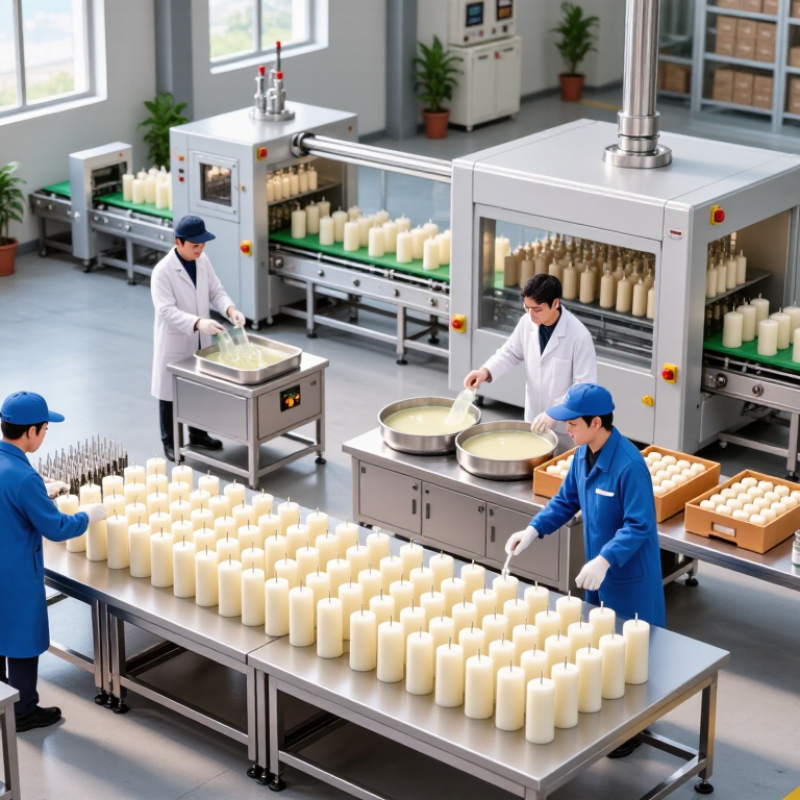
How to Choose a Top Contract Candle Manufacturer in China?

Define Candle Specifications with Wax, Wick, Fragrance, and Burn-Time Data

How to Choose a Top Contract Candle Manufacturer in China?
Define Candle Specifications with Wax, Wick, Fragrance, and Burn-Time Data

A reliable manufacturing brief begins with measurable details, not phrases like “clean burn” or “strong scent.” Specify the wax type or blend, candle weight, vessel diameter, and target fragrance character. Record the fragrance percentage for each sample, since scent can change after curing. Small details matter.

Describe the wick material and size, but leave room for controlled testing. A wick that performs well in a narrow jar may create excess heat in a wider one. Ask the manufacturer to test the complete candle, using the intended wax, fragrance, vessel, and lid. Request observations on flame stability, melt-pool width, visible residue, and container temperature. These notes are more useful than a single “passed” label.

Set a target burn time, then define how it will be measured. Test multiple candles under consistent conditions, and record each result rather than relying on one sample. Burn time varies with room airflow, wick trimming, and production differences. The first specification may be wrong; revise it when test data points to a better balance. Ask for batch records and retain approved samples, so later production can be compared against the original. A tidy spreadsheet helps, though it cannot replace a real burn test.

Screen Chinese Manufacturers for ISO 9001 Certification and Factory Traceability

A reliable contract candle manufacturer should be able to show more than an ISO 9001 certificate on a website. Ask for the certificate number, issuing body, validity dates, and certified site address. Check that the scope covers relevant manufacturing activities, not just an unrelated office. A current certificate is useful, but it does not prove every batch will meet your specifications.

Look at how the factory traces materials through production. Can staff connect a finished candle’s batch code to its wax, wick, fragrance, pour date, and inspection record? Ask to see a redacted example, then compare it with the supplier’s written procedure.

Paperwork is not proof. During a factory review, follow one batch from incoming-material labels to packed cartons, and note any gaps or unclear handoffs. Retained samples and documented checks for weight, appearance, and burn performance can add confidence.

A clean folder can still hide a weak process. I would not treat one polished audit day as the whole story; records should match routine floor practices.

If a supplier cannot explain who updates traceability logs, or how errors are corrected, pause and ask for a clearer answer.

Verify Fire Safety Against ASTM F2417 and EN 15493:2019

When choosing a contract candle manufacturer in China, ask for fire-safety test reports against ASTM F2417 and EN 15493:2019. These standards address candle fire behavior, including flame height, stability, secondary ignition, and end-of-life performance. A certificate alone may not show what was tested. Check the report date, tested model, dimensions, wax, wick, and any stated limitations.

Ask whether the tested candle matches the product you plan to order. A wick change, a different fragrance load, or a new vessel can alter how a candle burns. Small changes matter. Request the test method and results, then confirm the manufacturer can trace them to production samples. If testing covers only a similar design, treat that as a gap to investigate, not proof of compliance.

Reliable suppliers can explain how they control wick placement, vessel condition, and batch consistency. Ask what happens when materials or production settings change, and whether they repeat relevant tests. Review reports carefully; standards do not remove every risk, and a test result is not a guarantee for every use condition. I would also ask to see how the finished candle is checked before shipment. The paperwork matters, but the actual product matters more.

Assess Sooting and Safety Labels Using EN 15426 and EN 15494

How to Choose a Top Contract Candle Manufacturer in China?

Assess Sooting and Safety Labels Using EN 15426 and EN 15494

A capable candle manufacturer should explain how it assesses soot, not simply promise a “clean burn.” EN 15426 provides a method for evaluating a candle’s sooting behaviour under defined test conditions. Ask for the test report and check that it covers the candle you plan to order. Wax, wick, fragrance, and container details matter. A report for a similar candle is useful, but it is not the same as evidence for your specification.

EN 15494 addresses safety labels for indoor candles. Check that proposed labels include clear, readable safety instructions and suit the candle’s intended use. Review a physical label proof, not only a digital mock-up. Small text can become hard to read on curved glass. Confirm that label details match the finished product and packaging. Testing cannot predict every home, either. Drafts, trim length, and nearby objects can change how a candle behaves.

Tips: Request dated reports, test-method details, and samples from the production setup. Ask what happens when a wick or fragrance changes. Then compare the sample’s flame, visible smoke, and container temperature during supervised checks. Keep records. It sounds fussy, but small changes can matter. A supplier’s answers should be specific, consistent, and easy to verify.

Compare MOQ, Monthly Capacity, Lead Time, and Quality-Control Records

How to Choose a Top Contract Candle Manufacturer in China?

Compare more than the quoted unit price. Ask for the minimum order quantity (MOQ) by scent, vessel, and packaging option. A low MOQ may apply only to standard materials, while custom vessels require larger runs. Confirm monthly capacity and ask how much production time is already committed. A factory’s maximum output is less useful than the capacity available for your order. Request a written lead-time estimate covering sampling, material sourcing, production, and packing. These steps can take longer than expected.

Tips: Ask to see recent quality-control records, not just a blank checklist. Look for batch dates, inspection results, defect rates, and corrective actions. Candle checks may include wick placement, vessel condition, fill weight, and burn-test observations. Records should be traceable to production batches.

Before committing, review a pre-production sample and agree on measurable acceptance criteria. Ask how the manufacturer handles an off-spec batch and whether reinspection is documented. Compare quoted lead times with past order records, where available. A neat spreadsheet helps, but it cannot reveal every production habit. I would still verify details through samples and direct questions; that takes time, and sometimes the answers remain imperfect.

How to Choose a Top Contract Candle Manufacturer in China? — Compare MOQ, Monthly Capacity, Lead Time, and Quality-Control Records

Buyer’s screening guide: The figures below are indicative planning ranges, not verified market averages or guarantees. Actual terms vary by candle type, fragrance, packaging, order mix, and factory schedule. Confirm every figure in a written quotation and supporting records.

Comparison dimension Useful screening benchmark What to request and verify Warning signs
Minimum order quantity (MOQ) Compare MOQ separately for each candle formula, fragrance, vessel, and packaging option. A supplier may quote a lower MOQ for stock vessels and a higher one for custom components. Ask for the MOQ per SKU and per fragrance, plus any setup, mold, label, or packaging minimums. Request a written cost breakdown for a pilot order and a repeat order. One headline MOQ is given without clarifying whether it applies per fragrance, color, vessel, or full order; extra minimums appear after sampling.
Monthly production capacity Assess capacity in units of your actual product type and configuration—not a broad figure covering all products. Ask for both rated capacity and currently available capacity. Request a recent production plan or capacity statement showing product type, shift pattern, bottleneck processes, and expected allocation for your order. Check whether pouring, curing, labeling, and packing are included. Capacity is stated only as a large monthly total, with no explanation of product mix, shifts, subcontracting, or current workload.
Sample lead time Allow time for fragrance selection, wick testing, vessel compatibility, and sample revisions. Confirm whether the quoted period starts after specifications and materials are approved. Ask for a dated sample schedule with milestones for formula confirmation, sample dispatch, and revision rounds. Confirm courier time and who pays for revised samples. A very short promise is made before the fragrance, wax, wick, vessel, and packaging specifications are finalized.
Production lead time Request a schedule tied to a defined order and approval point. Lead time can change with custom vessels, packaging procurement, seasonal demand, and production queue. Obtain separate estimates for material procurement, production, curing or conditioning where applicable, inspection, packing, and dispatch. Ask how delays are reported and managed. The supplier gives a single delivery date without defining when the clock starts or accounting for approvals and material availability.
Quality-control records Look for documented checks at incoming-material, in-process, and finished-goods stages, with records traceable to production lots. Request redacted examples of inspection checklists, batch or lot records, defect logs, corrective-action reports, and the final inspection criteria used for your product. Quality is described only as “strict” or “100% inspected,” but no sample records, acceptance criteria, or traceability are available.
Burn and product testing Testing should reflect the candle’s wax, wick, fragrance load, vessel, and intended use. Agree on test conditions and acceptance criteria before bulk production. Ask for test reports or logs covering relevant observations such as flame behavior, melt pool, tunneling, soot, vessel condition, and burn performance. Confirm who performs the tests and on which production samples. Tests are shown for a different formula or vessel, or results are supplied without dates, sample identification, or defined test conditions.
Materials and traceability Key inputs should be identifiable by supplier, specification, and lot where applicable. Substitutions should require buyer approval. Request specifications or declarations for wax, fragrance, wick, vessel, and packaging, along with the process for recording incoming lots and notifying you of changes. Materials may be changed without notice, or the supplier cannot connect finished goods to input lots.
Pre-shipment inspection Agree on inspection scope and pass/fail criteria before production. Inspection can cover quantity, workmanship, labeling, packaging, and agreed product checks. Ask for the inspection checklist, sample size or inspection method, defect classifications, photo records, and the procedure for rework or replacement if results fail. Inspection happens only after goods are packed, or there is no written process for handling nonconforming products.

FAQS

What details should a candle manufacturing brief include?

Specify wax type, candle weight, vessel diameter, fragrance character, and fragrance percentage. Small details matter.

How should wick size be selected?

Describe the wick material and size, then test it in the finished candle. A wick suited to a narrow jar may overheat a wider one.

How can burn time be measured reliably?

Test several candles under consistent conditions and record each result. Airflow and wick trimming can change burn time. One sample is not enough.

What should a complete candle test record?

Note flame stability, melt-pool width, visible residue, and container temperature. Keep batch records and approved samples for comparison.

Which fire-safety reports should a supplier provide?

Request reports against ASTM F2417 and EN 15493:2019. Check the date, tested model, dimensions, wax, wick, and report limitations.

Does a report for a similar candle prove the ordered candle was tested?

No. A changed wick, fragrance load, or vessel can affect burning. Treat a similar-design report as a gap to investigate.

How should candle sooting be assessed?

Ask for an EN 15426 report covering the specified candle. Compare the tested wax, wick, fragrance, and container with the production sample.

What should indoor candle safety labels include?

Review a physical label proof for clear, readable instructions. Curved glass can make small text difficult to read.

What changes may require more testing?

Ask whether wick, fragrance, material, or production changes trigger relevant tests. Testing cannot cover every home or draft. Keep records.

Conclusion

Choosing a top contract candle manufacturer in China starts with clearly defining the product. Specify the wax blend, wick type, fragrance profile, container, intended burn time, and performance requirements so potential suppliers can assess feasibility and provide comparable quotations. During screening, look for documented quality systems such as ISO 9001, clear factory traceability, and records showing how materials and production batches are controlled.

Before placing an order, review evidence of fire-safety testing against relevant requirements, including ASTM F2417 and EN 15493:2019, and assess soot performance and product safety labeling with reference to EN 15426 and EN 15494. Compare each manufacturer’s minimum order quantity, monthly capacity, lead time, and quality-control documentation—not price alone. A careful evaluation of these factors helps reduce production surprises and supports consistent results. Strong Contract Candle Manufacturing depends on clear specifications, verifiable processes, suitable testing, and communication that keeps expectations aligned from sampling through delivery.


Evelyn

Evelyn

Evelyn is a professional marketing specialist dedicated to helping customers better understand innovative products, practical solutions, and the value they can bring to everyday business and life. With a strong understanding of the company’s product portfolio, market trends, customer needs, and......