
Engineered for luxury hospitality environments, retail spaces, and commercial properties. Fully certified under EU safety and electrical standards.

In modern commercial architecture and luxury hotel operations, multisensory environment design has evolved from a subtle aesthetic detail into a strategic brand differentiator. Olfactory marketing directly impacts guest recall, dwell time, and emotional perception of service quality. However, deploying scent delivery infrastructure across multi-story hotel developments, casino floors, corporate headquarters, and high-traffic public spaces presents complex engineering, safety, and regulatory challenges.
Procurement directors and facility managers must navigate non-negotiable legal mandates, specifically electrical safety, electromagnetic compatibility, and chemical safety compliance. A scent machine operating 24/7 within a centralized HVAC duct or guest lobby must meet rigorous international testing benchmarks to avoid operational downtime, fire risks, or regulatory fines.
Uncertified micro-nebulizer pumps or unverified oil formulations expose commercial properties to severe liability. Legally compliant sourcing requires verified CE Marking (covering LVD, EMC, and RoHS directives) alongside strict IFRA 51st Amendment chemical compliance for all aromatic liquid diffusion media.
CE marking is not a mere marketing badge; it is a legally enforced safety declaration mandatory for commercial hardware deployed in Europe, the Middle East, and worldwide hospitality chains.
Low Voltage Directive compliance guarantees that scent machines operating between 50–1000V AC or 75–1500V DC prevent electrical shock, thermal burns, insulation breakdown, and internal mechanical hazards during continuous operation.
Electromagnetic Compatibility ensures that high-frequency ultrasonic or twin-fluid cold-air nebulization pumps emit no radio interference affecting hotel Wi-Fi, keycard access systems, or BMS control networks.
Restriction of Hazardous Substances verification certifies that all internal circuit boards, solenoids, wiring, and atomizer cores are entirely free from Lead, Mercury, Cadmium, PBBs, and PBDE flame retardants.
Technical Insight: Why CE-LVD & CE-EMC Matter in Hotel Centralized Air Conditioning (HVAC) Installations
When connecting scent diffusers directly to central air handling units (AHUs), electromagnetic noise can feedback into building automation system (BAS) loops, triggering false sensor alarms. Our CE-certified systems utilize isolated electromagnetic shielding and low-decibel German-engineered pump cores to maintain operational silence and network isolation.
| Compliance Metric | CE Certified Hotel Scent Supplier Standard | Uncertified Generic Scent Manufacturers | Impact on Hotel Operations |
|---|---|---|---|
| Electrical Safety | EN 60335-1 & EN 60335-2-65 (LVD Pass) | No third-party testing report | Zero Risk Prevents short-circuits & electrical fires |
| Electromagnetic Noise | EN 55014-1 & EN 55014-2 (EMC Pass) | Causes interference with Wi-Fi & AV systems | Uninterrupted Smooth building IoT integration |
| Diffusion Media Safety | IFRA 51st Standard & SDS Certified | Unregulated synthetic oil mixtures | Air Quality Safe Non-toxic, allergen-tested for hotel guests |
| HVAC Duty Cycle | 24/7/365 Continuous Industrial Grade | Overheats after 4-6 hours of use | High Reliability Protects expensive HVAC ductwork |
Understanding the fluid dynamics behind sub-micron essential oil micro-atomization for hospitality environments.
Traditional aroma diffusers rely on water-diluted ultrasonic misting or thermal evaporation. Thermal systems alter the delicate chemical profile of top, heart, and base notes through heat degradation, while water misting increases ambient humidity, causing bacterial growth inside hotel ducting and residue accumulation on luxury upholstery.
Commercial-grade CE Certified Cold-Air Scent Diffusers employ high-pressure twin-fluid nozzle physics. By forcing compressed air through a micro-orifice glass or stainless-steel nozzle, essential oil blends are atomized into dry gas-phase particles measuring between 0.5 to 3 microns in diameter.
Physics of Dry Scent Particles:
Because particles below 5 microns possess negligible gravitational settling velocity, micro-atomized scent molecules float evenly in ambient airflow currents without falling onto polished floors, marble counters, or textile furnishings.
Key shifts impacting hotel group RFP specifications, hotel asset management, and contract scent manufacturing.
Future RFPs require commercial scent machines equipped with RS-485, BACnet, or Wi-Fi control, permitting central facility management teams to monitor fragrance oil levels, pump running time, and duty cycles remotely across global hotel portfolios.
Hotel groups are phasing out synthetic carrier solvents like DPG (Dipropylene Glycol) in favor of biodegradable, plant-derived, non-VOC solvents aligned with LEED and WELL Building Standard certifications.
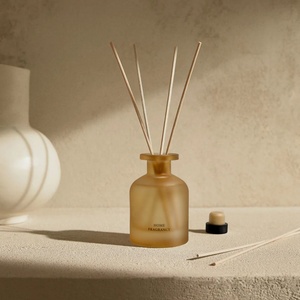
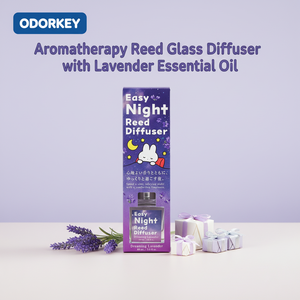
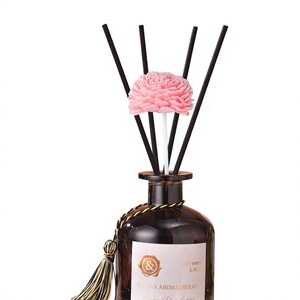
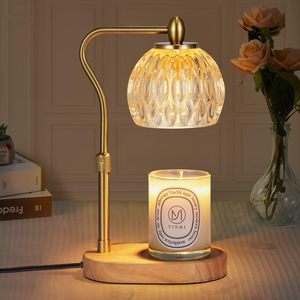
Leading luxury brands are pairing centralized HVAC scent diffusion in main public spaces with localized, matching ambient products—such as private label reed diffusers, luxury soy candles, and custom room mists—creating lucrative retail cross-selling channels.
Established in 1996, Thailand’s premier OEM/ODM manufacturer for global hospitality and commercial home fragrance brands.
With 29+ years of dedicated experience in custom scent development, hardware engineering, and vessel manufacturing, Implement Design Associates delivers end-to-end solutions for global brand owners, spa chains, and luxury hotel groups in over 40 countries.
Operating out of our expansive 16,000 m² integrated production center spanning Bangkok and Chon Buri, Thailand, we provide complete vertical integration—from raw scent formulation and safety testing to precise CNC machining, ceramic crafting, vessel decorating, and final international export documentation.
Recognized Industry Leadership:
Recipient of the prestigious Good Design Award and Thailand’s Prime Minister's Export Award, validating our international design standard and trade reliability.
Clear, direct answers regarding compliance, minimum order quantities (MOQ), HVAC installation, and private-label customization.
Every shipment is backed by official CE test reports for LVD (EN 60335-1) and EMC (EN 55014), along with RoHS 2.0 component certifications. For aromatic fluids, we provide full Safety Data Sheets (SDS 16 sections), IFRA Conformity Certificates, and Allergen Declarations required by international customs and health authorities.
Our commercial HVAC nebulizers connect via high-pressure flexible PU tubing inserted directly into the supply air duct downstream of filters and cooling coils. The micro-atomized oil vapor immediately mixes with airflow without coating duct walls or compromising air filters.
Custom fragrance matching and hardware casing design takes 2–4 weeks. Pre-production golden sample verification takes 2–3 weeks. Mass production and automated assembly typically complete within 4–8 weeks depending on component customization and order scale.
Yes. Our in-house analytical chemists utilize Gas Chromatography-Mass Spectrometry (GC-MS) technology to analyze and reconstruct target olfactory profiles while ensuring full compliance with updated IFRA restrictions and regional safety standards.
Thailand offers zero or low tariff rates under extensive Free Trade Agreements (FTAs) across Asia, Australasia, and Europe. Furthermore, Thailand's world-renowned heritage in spa wellness, essential oil alchemy, and ceramic craft elevated by our automated facility gives your brand superior storytelling and lower landed costs.
We offer complete turnkey OEM services including custom-molded glass or ceramic vessels, laser engraving, hot stamping, bespoke silk-screen graphics, eco-friendly FSC cardboard packaging, custom reed sticks, and tailored liquid fragrance volumes (50ml to 5000ml).
Connect directly with our engineering and perfumery technical teams. Receive detailed hardware specs, compliance documentation, and factory-direct pricing for your upcoming hotel project or retail collection.