
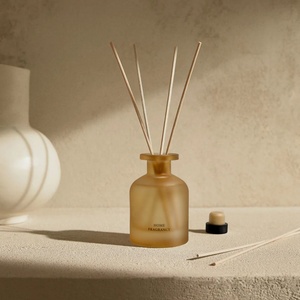
Engineered for commercial stability, superior olfactory throw, and strict IFRA 51st Amendment compliance across international retail markets.
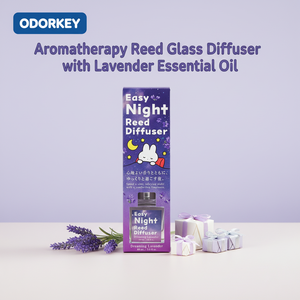
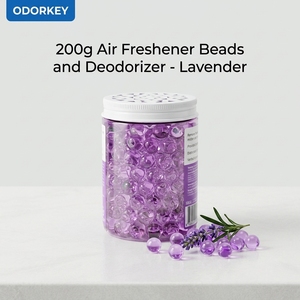
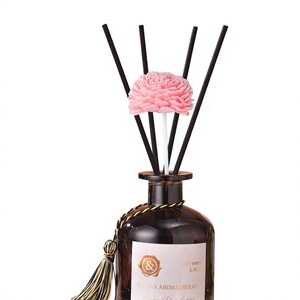
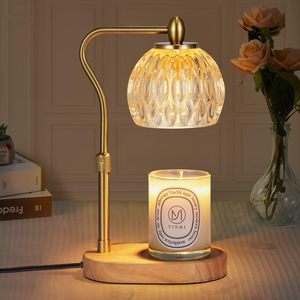
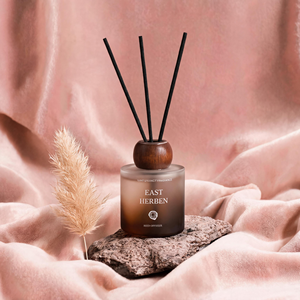

The global fragrance and home scenting market has undergone a structural shift. Modern brand owners, procurement officers, and private label innovators no longer evaluate perfume oil manufacturers solely on initial unit cost. In an environment governed by strict toxicological regulations, volatile international shipping supply chains, and evolving consumer safety expectations, selecting the right partner among China top perfume oil manufacturers requires a technical audit of formulation science, analytical capabilities, carrier solvent safety, and compliance infrastructure.
As a global OEM contract manufacturer operating advanced R&D laboratories and a 16,000 square meter industrial complex, Implement Design Associates (in partnership with regional manufacturing infrastructure across Thailand and China) provides complete, end-to-end fragrance development. This report outlines the technical standards, chemical carrier dynamics, regulatory frameworks, and market procurement trends required to scale commercial home fragrance collections globally.
“Information Gain in perfume oil procurement comes from understanding the physics of cold vs. hot scent throw, carrier evaporation kinetics, and GC-MS raw material trace analytical verification—not just smelling a blotter strip.”
When sourcing fragrance concentrates for reed diffusers, fine candles, room mists, or electric cold-air nebulizers, contract buyers must scrutinize five analytical benchmarks to ensure brand protection and product longevity:
Every batch of raw fragrance oil must undergo GC-MS testing to confirm olfactory profile consistency, identify trace impurities, and ensure phthalate-free, nitro-musk-free compliance before compounding.
Fragrance oils formulated for scented wax candles demand flashpoints above 75°C (167°F) to prevent thermal flashoff during hot-pour processing (65°C–85°C) and eliminate container pooling risks.
Replacing high-VOC alcohol bases with eco-friendly solvents (such as Dowanol TPM, MMB, or Solquetal) ensures uniform capillary wick ascent in reed diffusers without clogging pore channels.
Perfume oils enriched with natural citrus terpenes or vanillin are prone to browning. Advanced OEM plants add non-toxic UV stabilizers (such as Tinogard TT) to lock in clear glass clarity.
A primary failure point in commercial private label reed diffusers is improper carrier solvent selection. Traditional low-cost manufacturers frequently dilute perfume oils with Dipropylene Glycol (DPG) or Isopar isoparaffin fluids. While inexpensive, DPG exhibits excessive viscosity, preventing capillary climb up rattan or high-density synthetic fiber reeds, resulting in rapid scent drop-off after 7 to 10 days.
Leading Chinese and Asian OEM labs utilize modern eco-solvents engineered for constant linear evaporation rates. The table below details the technical performance of next-generation carriers used in our contract manufacturing operations:
| Carrier Solvent Name | Evaporation Rate (vs BuAc=1) | VOC Status (US CARB / EU REACH) | Wick Viscosity (mPa·s @ 25°C) | Optimal Application Format |
|---|---|---|---|---|
| 3-Methoxy-3-Methyl-1-Butanol (MMB) | 0.07 (Linear) | Exempt / Zero-VOC | 1.8 (Ultra-Low) | Luxury Reed Diffusers & Room Sprays |
| Solquetal (Glycerin-derived) | 0.03 (Slow-Release) | Bio-based / Exempt | 11.0 (Balanced) | 90-Day Long-Lasting Home Diffusers |
| Dowanol DPM / TPM Blend | 0.02 (Sustained) | Low VOC Compliant | 5.5 (Medium) | Commercial Hospitality Ambiance Systems |
| Triethyl Citrate (TEC) | 0.01 (Residual) | 100% Natural / Biodegradable | 35.0 (High) | Natural Essential Oil Fixative Base |
| Traditional DPG (Legacy Base) | < 0.005 (Stagnant) | Regulated VOC | 75.0 (Excessive) | Not recommended for reed diffusers |
As major global retailers (such as Sephora, Target, and luxury department stores) institute strict "Clean Beauty & Home Chemistry" standards, procurement directors must align their supply chains with three dominant product macro-trends:
Consumers no longer purchase home fragrances purely for masking ambient odors. Intent-driven search analytics reveal exponential demand for mood-modulating scents. Formulations backed by neuro-sensory testing—incorporating natural lavender extracts, linalyl acetate, beta-caryophyllene, and cedarwood cedrol—are verified to promote REM sleep cycles and mitigate stress markers. Sourcing strategies must incorporate functional certification alongside scent profile documentation.
Global regulatory pressure on Volatile Organic Compounds (VOCs) and flammable aerosol propellant bans (EU Aerosol Dispensers Directive) have accelerated the shift toward water-based micro-emulsions. Utilizing high-shear homogenization technology, custom oil-in-water nano-emulsions allow up to 15% fragrance oil load dissolved in purified water without requiring ethyl alcohol, producing a non-flammable fine mist ideal for linen, upholstery, and aviation cabin scenting.
With urban residential safety guidelines restricting open flame combustion, consumer interest in traditional wax candles is shifting toward dual-purpose halogen wax warmer lamps and cold-air fluid atomizers. Procurement pipelines must integrate hardware manufacturing alongside fragrance oil blending to deliver plug-and-play retail presentation boxes containing both the electric warmer device and matching scented waxes or oil vials.
By leveraging dual-hub logistics—combining China’s unmatched glassware synthesis, precision nozzle tooling, and aromatic chemical production with Thailand’s low export tariffs, ASEAN Free Trade Agreements (FTA), and premium artisanal botanical sourcing—brands achieve optimized landed cost structures while insulating their supply chains from unilateral tariff shocks.
To capture market share in competitive retail environments, contract manufacturers must execute rapid-cycle development without sacrificing structural fragrance integrity. Key development trends include:
Implement Design Associates stands out in the OEM/ODM private label home fragrance sector through engineered operational strengths:
Equipped with automated multi-head liquid filling lines, high-precision volumetric dosing units, vacuum crimping, and automated shrink-tunnel packaging capabilities, guaranteeing mass volume delivery.
Since 1996, our engineering and perfumery teams have successfully exported to over 40 countries across Europe, North America, East Asia, and the Middle East, navigating custom regulatory regimes seamlessly.
Full spectrum testing: thermal stability ovens (45°C/50°C), freeze-thaw chamber cycling (-10°C to +40°C), burn performance chamber testing, and transit carton drop/vibration testing according to ISTA standards.
Recipients of the Prime Minister's Export Award and Good Design Award. All custom formulations, vessel molds, and brand scent profiles are safeguarded under enforceable Non-Disclosure Agreements (NDA).
Clear, non-technical and technical guidance regarding MOQs, compliance protocols, testing cycles, and global shipping logistics.
Every custom fragrance compound is shipped with a comprehensive regulatory dossier. This includes the IFRA 51st Amendment Certificate of Conformity, Safety Data Sheet (SDS) formatted per GHS Revision 8 / EU REACH regulations, EU 1223/2009 Cosmetic Product Safety Report (CPSR) support documentation, 26 Allergen Declaration reports, and Proposition 65 chemical inventory clearance certificates.
We maintain a "Golden Sample" retention library in climate-controlled storage for 36 months. Every new production lot undergoes Spectrophotometric color matching (ΔE < 0.5), Refractive Index (RI) testing, Specific Gravity (SG) measurement, and GC-MS fingerprint verification against the approved golden sample prior to filling.
For custom fragrance oil blending in bulk drums, MOQs start at 50kg per scent. For complete turnkey private label reed diffusers or packaged candles, standard MOQs range from 1,000 to 3,000 units per SKU depending on vessel decoration complexity (e.g., custom spray coating, electroplating, hot-stamping). Sampling takes 2–3 weeks; mass production takes 4–6 weeks.
Yes. Utilizing GC-MS analytical deconstruction combined with our master perfumers' sensory evaluation, we can benchmark reference scent profiles, optimize the olfactory heart notes, and reformulate the oil to meet target landed costs or cleaner regulatory guidelines without losing scent character.
Formulations using high-VOC alcohol or volatile hydrocarbons are classified as Class 3 Dangerous Goods (UN 1266 / UN 1993), incurring heavy ocean freight surcharges and hazardous storage fees. By engineering our reed diffusers with non-flammable eco-solvents (flashpoints > 100°C), products ship as Non-Hazardous Cargo, dramatically lowering landed logistics costs.
We provide comprehensive vessel customization: matte frosted coating, high-gloss lacquering, metallic electroplating, 360-degree screen printing, foil hot-stamping, laser etching on solid wood lids (walnut, teak, mango wood), custom silicone seal molding, and bespoke rigid gift box structural engineering.
Request our complete master product catalog, raw material formulation samples, and factory pricing direct from our project engineering office.