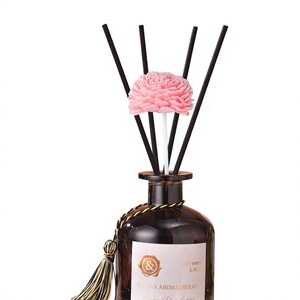
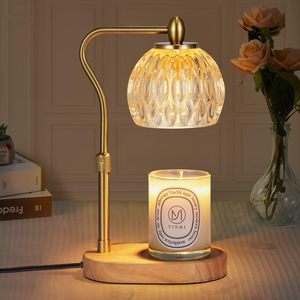
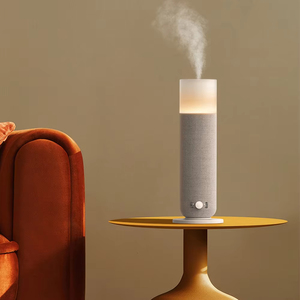
Explore our top-performing, export-ready home fragrance, reed diffuser, and aromatherapy warming solutions manufactured under strict ISO/IFRA international standards.
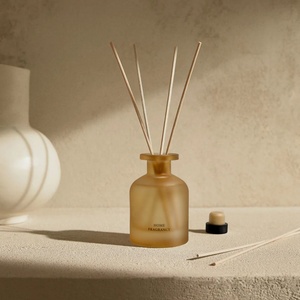
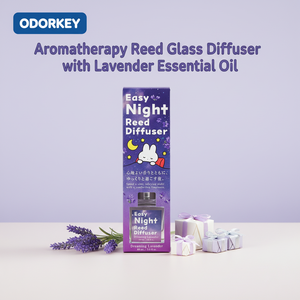
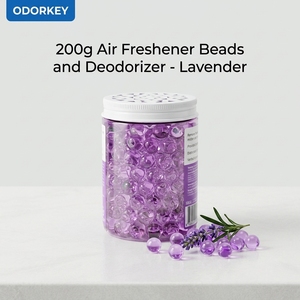
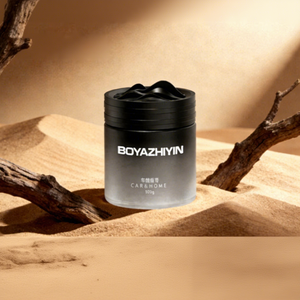
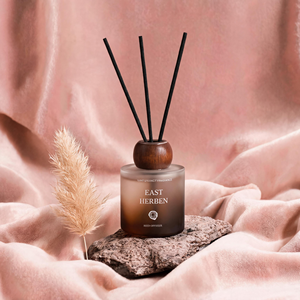
Integrating end-to-end industrial manufacturing with bespoke R&D perfumery chemistry to protect your brand margins and ensure international regulatory compliance.
Utilizing strategic Asian manufacturing hubs and free trade agreement (FTA) networks, our export logistics optimize landed costs for North American, European, and Middle Eastern retail distributors.
In-house fragrance chemists leverage Gas Chromatography-Mass Spectrometry (GC-MS) to formulate bespoke olfactory profiles, matching designer benchmarks or crafting phthalate-free, non-toxic signature aromas.
Every batch comes certified with IFRA 51st Amendment conformity statements, Safety Data Sheets (SDS), EU CLP labeling compliance, California Prop 65 verification, and heavy metal testing reports.
From mouth-blown heavy glass and hand-turned teak/walnut lids to high-density rattan and zero-clog polymer reeds, our structural engineering enhances shelf presence and user experience.
A single point of industrial accountability covering market research, custom mold design, automated filling, multi-stage AQL quality inspection, and FOB/DDP shipping consolidation.
Pioneering eco-friendly carrier matrices including bio-based Augéo solvents, 100% natural soy/coconut waxes, lead-free cotton wicks, and recyclable FSC-certified rigid packaging solutions.
The global luxury home fragrance market is undergoing a seismic shift. Driven by growing consumer demand for home ambiance, olfactory wellness, and premium interior decor, retail brands, boutique hoteliers, and e-commerce entrepreneurs are seeking reliable Private Label Manufacturers and OEM/ODM Factories in China. Choosing the right contract manufacturing partner requires navigating complex technical variables—from solvent evaporation dynamics and fragrance stability to international safety compliance and sustainable packaging design.
As a leading manufacturing infrastructure with over 29 years of operational excellence, our production capabilities bridge the gap between artistic scent creation and scalable industrial chemistry. This comprehensive whitepaper breaks down the key technical, regulatory, and supply chain considerations vital for procurement executives and brand owners launching private label fragrance collections in today's competitive global market.
A common pitfall in private label reed diffuser development is treating liquid formulation as a simple mix of essential oils and carrier alcohol. Industrial-grade formulations demand precise thermodynamic control over evaporation rates, fragrance load saturation, flashpoints, and reed capillary absorption dynamics.
The carrier solvent dictates the scent throw radius, longevity, and clear aesthetic of a reed diffuser. Traditional lower-cost manufacturers frequently rely on Dipropylene Glycol (DPG) diluted with ethanol. However, modern clean-label brands require eco-friendly, low-VOC (Volatile Organic Compound) solvents that ensure continuous evaporation without clogging capillary pores:
| Solvent Matrix | Evaporation Rate | VOC Status | Fragrance Load Cap. | Target Product Line |
|---|---|---|---|---|
| Augéo Clean Multi | Medium-Slow (Controlled) | VOC-Exempt (US/EU) | Up to 25% | Clean Luxury & Eco-Boutique |
| MMB Solvent Base | Medium-Fast (High Throw) | Low VOC Compliant | Up to 20% | Commercial Hospitality & Retail |
| Bio-Ethanol / Water Blend | Fast (Initial Burst) | Regulated VOC | 5% - 10% | Economy Mass-Market Sprays |
| DPG / TPM Hybrid | Ultra-Slow (Extended) | Standard Compliant | Up to 15% | Budget Long-Lasting Diffusers |
The diffusion vehicle must be tuned to the viscosity of the oil matrix. Natural rattan sticks contain micro-canals that can become clogged over time by heavy resinous base notes (such as patchouli, amber, or vanilla). Synthetic engineered high-density polyester fiber reeds eliminate clogging, delivering uniform capillary action without requiring frequent manual flipping.
Manufacturing private label scented candles requires mastering the burn dynamics between wax bases, container geometries, wick thermal outputs, and fragrance oil saturation points. A premium candle must deliver both an intense Cold Throw (fragrance intensity at room temperature) and an expansive Hot Throw (scent dispersion when lit), without tunneling, soot formation, or wax frosting.
Our R&D laboratory customizes wax matrix formulations according to regional climate destination and container specs:
B2B buyers and brand managers must align their manufacturing roadmaps with emerging global consumer preferences. Sourcing from China's top OEM/ODM factories allows brands to rapidly prototype next-generation products ahead of market competitors:
Consumers are moving beyond mere ambient fragrance toward functional wellness scents formulated to improve sleep quality, reduce cognitive fatigue, or enhance focus. Key ingredients such as high-purity natural lavender essential oils, cedarwood cedrol isolates, and bergamot terpenes are scientifically validated to influence mood regulation.
Safety concerns regarding open flames in apartment buildings and hotel suites have accelerated the growth of electronic wax melt warmers, height-adjustable dimmer candle lamps, and waterless cold-air aroma diffusion machines. Ultrasonic and nebulizing diffusers convert pure fragrance oils into micro-meter aerosols, providing continuous scenting across large hospitality spaces up to 1,000 m³.
Mass luxury retailers are phasing out single-use plastic bottles. Preferred private label options include heavy-wall matte frosted glass bottles, hand-blown amber apothecary jars, recyclable aluminum refill pouches, and FSC-certified rigid presentation boxes printed with soy-based inks.
Cross-border commercialization of home fragrance products requires rigorous adherence to international chemical safety regulations. Failing to meet regional documentation standard can lead to customs impoundment and product recalls.
Our OEM manufacturing process incorporates standardized testing protocols at every production milestone:
Clear, direct answers regarding minimum order quantities, custom tooling, regulatory clearance, and production lead times.
Our standard MOQ for private label reed diffusers and scented candles starts at 1,000 to 3,000 units per SKU, depending on vessel customization (e.g., custom glass spraying, electroplating, or hot-stamping). For fully custom custom-molded glass containers, vessel MOQs start at 5,000 units.
A typical end-to-end project timeline ranges from 8 to 14 weeks: Fragrance formulation matching and vessel sampling require 2 to 3 weeks; artwork proofing and stability testing take 2 weeks; mass production and automated filling take 4 to 6 weeks depending on component availability.
Yes. Utilizing GC-MS (Gas Chromatography-Mass Spectrometry) analytical equipment, our perfumery chemists can analyze reference scent samples and formulate high-fidelity matches optimized for your target carrier matrix, price point, and regulatory requirements.
Absolutly. We supply complete regulatory dossier packages including IFRA Conformity Certificates, 16-section GHS Safety Data Sheets (SDS), EU CLP CLP allergen declarations, REACH compliance statements, and transport safety documents for sea and air freight.
We provide full structural packaging engineering: custom-molded clear or frosted glass, silk-screen printing, metallic foil stamping, embossed wood/metal caps, customized fiber stick colors, rigid magnetic gift boxes, and eco-friendly corrugated kraft sleeves.
Every raw material lot undergoes incoming Quality Control (IQC) via refractometer and specific gravity testing. Production batches are blended using automated mass-flow meters, and golden master samples are retained for 24 months for comparative batch-to-batch verification under AQL 0.65 criteria.
Partner with China's leading home fragrance manufacturer. Contact our OEM project engineers today to request technical specification sheets, sample kits, and comprehensive factory catalog pricing.