Direct Factory Supply, High-Diffusion Capillary Engineering, and Private Label Packaging Solutions
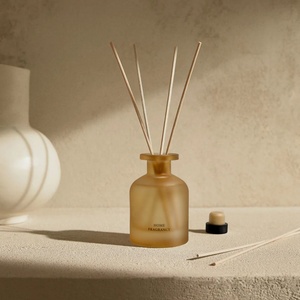
In the global luxury home fragrance ecosystem, the delivery mechanism is just as vital as the fragrance oil formulation itself. While scent profile chemistry commands substantial marketing attention, procurement directors, brand owners, and OEM managers recognize that capillary evaporation kinetics determine overall product performance. China stands at the absolute center of global diffuser stick manufacturing, providing over 82% of the world’s supply of high-porosity rattan, synthetic dacron polymer fiber, and engineered porous cotton sticks.
Sourcing from premier Chinese diffuser stick manufacturers offers unparalleled advantages in material science optimization, scalability, unit economics, and custom dimensional tolerances. However, navigating the B2B supplier landscape requires deep technical clarity regarding fluid dynamic performance, raw material origin, VOC/REACH safety compliance, and clogging resistance. This comprehensive whitepaper provides B2B sourcing teams, private label brands, and industrial buyers with the definitive criteria needed to evaluate, audit, and partner with top-tier OEM/ODM factories in China.
Engineered micro-tubular structures (0.1–0.3mm capillary channel diameter) ensure continuous, uniform oil siphoning without premature saturation decay.
Advanced reactive polymer dyeing processes guarantee zero color leaching, even when exposed to high-concentration alcohol or DPM solvent bases.
Fully compliant with IFRA Standards, EU REACH Annex XVII, CARB VOC limits, and FSC eco-friendly forestry sustainability standards.
To optimize cold-evaporation fragrance diffusion, industrial buyers must align stick material chemistry with their specific carrier liquid system (alcohol-based, glycol-ether based, eco-solvent, or natural carrier oil bases). China’s leading factories manufacture three primary categories of diffuser sticks:
Natural rattan (derived from Calamus rotang vines) remains the classic choice for artisanal and luxury aesthetic collections. High-quality rattan contains approximately 20 to 30 internal micro-capillary ducts per strand. These continuous longitudinal channels draw oil upward through natural suction. However, natural rattan possesses organic variances in density and capillary diameter, requiring strict factory kiln-drying (moisture content maintained below 8%) to eliminate mold spore risk and structural warping during oceanic container shipping.
Dacron fiber sticks represent the technological apex of modern scent diffusion. Composed of 100% continuous polyester filaments bound under precise heat-fusion, fiber sticks exhibit completely uniform porosity across 100% of their length. Unlike natural rattan, fiber sticks do not clog when paired with complex, heavy molecular essential oils or high-viscosity non-toxic solvents like Dowanol DPM or Augeo Clean Multi. They yield up to 300% faster scent throw rates, eliminating the need for periodic manual stick flipping.
Formulated from ultra-pure cellulose wood pulp and organic cotton fibers, these sticks offer a soft, matte visual texture while delivering exceptional absorption speed for low-alcohol room fragrances. They absorb liquid rapidly, making them ideal for small-volume (50ml–100ml) promotional diffuse systems where immediate scent dispersion is required.
| Material Type | Capillary Structure | Average Pore Diameter | Optimal Solvent System | Diffusion Uniformity | Clogging Resistance |
|---|---|---|---|---|---|
| Natural Rattan | 20–30 Natural Vascular Ducts | 0.18mm – 0.28mm | Alcohol / Ethanol / DPG Bases | Moderate (Flipping Required) | Moderate (Prone to Resin Build-up) |
| Dacron Polymer Fiber | Engineered Micro-capillary Matrix | 0.05mm – 0.12mm (Uniform) | Oil-Based / Eco-Solvents / Essential Oils | Ultra-High (Continuous Throw) | Exceptional (Zero Clogging) |
| Cellulose Cotton | Porous Intertwined Fibers | Variable Micro-Voids | Water-Based / Low VOC Formulations | High (Initial Fast Burst) | Good (High Absorption Capacity) |
| Colored Fiber (Custom) | Dyed Thermal Poly-Bond | 0.08mm – 0.15mm | Multipurpose Fragrance Solvents | Ultra-High | Exceptional (Fade-proof) |
As the global regulatory environment tightens regarding Volatile Organic Compounds (VOCs) and consumer demand for eco-conscious home wellness accelerates, top Chinese manufacturers are innovating next-generation production processes. Forward-thinking procurement strategies must account for these critical industry shifts:
Leading factories in Zhejiang and Guangdong are pioneering biodegradable synthetic fibers constructed from Poly Lactic Acid (PLA) and recycled PET (rPET). These materials combine the structural precision and non-clogging traits of traditional fiber sticks with a 100% circular economy carbon footprint.
Manual cutting methods often lead to crushed fiber tips, which seal off microscopic capillary openings and degrade fluid uptake by up to 35%. Top Chinese factories now employ high-speed ultrasonic cutting and laser beveling, ensuring clean, uncompressed end-faces for maximum absorption efficiency.
With traditional solvents such as DPG (Dipropylene Glycol) being replaced by eco-solvents with lower evaporation rates (such as MMB and Augeo), diffuser sticks must feature adjusted surface energy and contact angles. Leading manufacturers provide calibrated porosity matrix matching to guarantee consistent 60-day, 90-day, or 120-day product lifespans.
Selecting a premier Chinese manufacturer requires looking beyond unit pricing to audit the factory's structural quality assurance infrastructure. Tier-1 B2B manufacturers maintain full vertical integration—from raw material extrusion and dyeing to automated counting, bundling, and moisture-proof packaging.
Automated optical sensor sorting guarantees strict dimensional consistency: diameter tolerance within ±0.05mm and length tolerance within ±0.5mm, ensuring seamless fit into automated bottle-filling assembly lines.
Every natural rattan lot undergoes multi-stage vacuum drying and microwave sterilization, maintaining water activity levels below 0.65 to ensure zero mold growth during long overseas maritime transport.
Dyed sticks undergo rigorous 72-hour immersion testing in pure ethanol, dipropylene glycol, and high-concentration fragrance blends to certify zero color diffusion into the vessel liquid.
When auditing potential manufacturing partners in China, enterprise buyers should verify compliance with key international standards: ISO 9001:2015 for Quality Management, FSC (Forest Stewardship Council) chain-of-custody certification for natural wood/rattan sourcing, and full compliance with EU REACH Regulations regarding heavy metals and phthalates.
To assist global procurement teams in executing seamless factory contracts, our senior supply chain specialists have structured an actionable supplier evaluation matrix. Evaluating suppliers against these four structural benchmarks guarantees risk mitigation and reliable brand delivery:
Rattan sticks rely on natural vascular plant channels to draw fragrance upward, providing an authentic, natural aesthetic. Fiber sticks are synthetic polyester matrices that offer superior capillary uniformity, faster scent delivery, zero clogging with essential oils, and complete resistance to color bleeding.
As a rule of thumb, the total stick length should be roughly double the height of the glass vessel for optimal visual proportion and fluid lift. Standard diameters range from 3.0mm to 4.0mm for home diffusers, while larger 5.0mm to 8.0mm thick sticks are utilized for high-volume floor or hotel lobby diffusers.
Top-tier Chinese factories utilize automated kiln drying to reduce internal moisture content below 8%, followed by UV sterilization and vacuum sealing with industrial silica desiccants in moisture-barrier bags prior to shipment.
Yes. Custom fiber sticks can be color-matched to any Pantone (PMS) reference. High-grade factories use reactive thermoset dyes that bind permanently to polyester microfibers, guaranteeing zero color leaching into the carrier oil.
Standard sample prototyping takes 3–5 days. Mass production lead time typically ranges from 12 to 20 days depending on custom color dyeing, cutting specifications, and packaging complexity.